Latest News

Prestigious ERC grant (2.5M€) to restore the sense behind human manual dexterity after paralysis.
Giacomo Valle, Assistant Professor at Chalmers University of Technology, has received a prestigious starting grant from the European Research Council (ERC). In the Bionic-Dexterity project, he aims to give people with paralysis the ability not only to control a bionic arm and hand with their mind – but also to feel where it is and how it is moving.
Link to the news
.jpg)
From shortlist to finalist: our work is now among the top ten in in Life Sciences for the #FallingWalls Global Call for #ScienceBreakthroughs 2026.
Falling Walls Foundation
Link to the Article


The first and longest human study of its kind examining the safety of intracortical microstimulation (ICMS) is out today in Science Translational Medicine.
Using the Blackrock NeuroPort System, the Cortical Bionics Research Group showed that brain stimulation can safely and reliably evoke tactile sensations for up to a decade. Across 168 million pulses, 27 combined years of implant time, and 5 participants with spinal cord injury: safety held throughout, sensations stayed mapped to the hand, and 60% of electrodes remained functional after a full decade.
The strongest long-term evidence yet that sensory restoration can be safe and durable, laying the groundwork for future clinical-grade devices that could one day restore touch, hearing, and vision.
Link to the Paper

As implanted BCIs move closer to clinical reality, they offer unprecedented opportunities to restore communication, movement, and independence for people with severe neurological disabilities. At the same time, their implementation raises important ethical, clinical, and societal questions that deserve careful consideration.
This article, written together with colleagues from Neurosurgery and Rehabilitation Medicine, discusses both the promise and the challenges of bringing these technologies into healthcare.
#BrainComputerInterface #Neurotechnology #Neuroprosthetics #BCI #Rehabilitation #Neurosurgery #Neuroethics
Link to the paper

After more than 5 decades of parallel development, #corticalstimulation for artificial #vision & artificial #touch is beginning to converge
Our Nature Reviews Bioengineering
review brings together shared principles and modality-specific strategies across both fields
Link to the paper
.jpeg)
NEW PREPRINT OUT on how the human #brain encodes #touch is now available on BiorXiv
Cattabriga M. et al., 2026
In this work, we investigate how touch is encoded in the human #somatosensory (SC) and #motor (MC) cortices recorded via #microelectrode arrays across different conditions: touch with vision, touch without vision and observed touch.
Link to the paper

Great to be featured in the podcast interview by Eddie Avil Host 1CW -ONES Changing the WORLD, where we discussed the future of neuroprosthetics and sensory restoration.
Prof. Valle touched on current challenges, like restoring natural touch and proprioception, and the exciting directions the field is taking toward more intuitive, human-like interfaces.
Link to the episode
Beyond Neuralink: How This Scientist Is Teaching Amputees to FEEL With Bionic Hands | BCI Revolution

Check out the press release about our new paper published in Nature Communications
Nature Communication press release:

Check out the interview of Giacomo by Nature on the innovative brain interfacing opportunities of
Merge Labs.
Nature article:


✨ What if a bionic hand could move with your thoughts — and also let you feel edges, shapes, and even motion across your skin?🎙️In this episode of Neurocareers: Doing the Impossible! BCI Award Series, host Milena Korostenskaja, PhD, interviews Giacomo Valle, PhD, assistant professor at Chalmers University of Technology and 1st place winner of the 2024 BCI Award.
Live on the BCI Award Podcast


Giacomo Valle was interviewed in Nature to comment on an important new study in the field of neuroscience. Conducted by researchers at the University of Cambridge, the study reveals that the brain does not reorganize after limb amputations. The cortical body maps remains stable over time.
“The findings could have important implications for research on prosthetic limbs that are controlled through brain–computer interfaces implanted in the somatosensory cortex” Giacomo says in the interview and praises the study’s methodology.
Read the article!


Giacomo Valle interviewed about Brain-machine interface and more for PC för alla. Cyborg på riktigt – framtidens människa är redan verklighet - PCforAlla
Read the article (in Swedish) here

%202025-02-28%20at%205.png)
New book on the BCI award 2023: Bran-computer-interface Research. A State-of-Art Summary 12.
Check chapters:
- Multi-Electrode ICMS Enables Dexterous Use of Bionic Hands. Natalya D. Shelchkova, Giacomo Valle, Taylor G. Hobbs, Ceci Verbaarschot, John E. Downey, Robert A. Gaunt, Sliman J. Bensmaia, and Charles M. Greenspon
- Biomimetic BCI Conveys Naturalistic Touch Sensations Via Peripheral Nerve Stimulation for Bionic Legs. Giacomo Valle, Natalija Katic Secerovic, Thomas Stielglitz, Marko Bumbasirevic, and Stanisa Raspopovic
Thanks to: g.tec medical engineering GmbH and Christopher Guger
2 new book chapters!
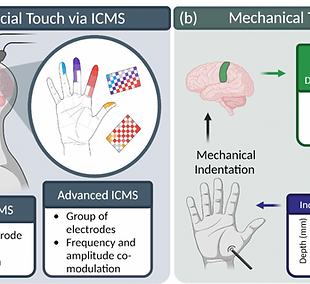
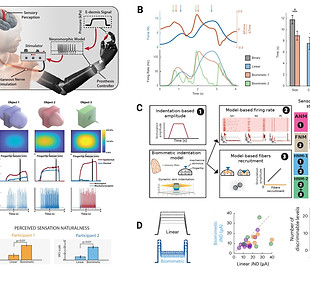
New review on biomimetic bionics with the Neuromuscular Lab
Thanks to: Jacky Tian Paul Cederna Stephen Kemp
New paper out

_svg.png)
Our research featured on Radio: BBC World Service Our BCI participant Scott Imbrie:
BBC Sound (starting at min 14:00)

Our research featured on Radio: BBC Radio 4 Our BCI participant Scott Imbrie and prof. Giacomo Valle:
BBC Sound (starting at min 19:38)


Our research featured on the New Scientist by Carissa Wong with Silvestro Micera
New Scientist article
_svg.png)


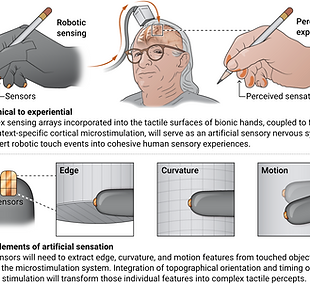
Interesting perspective on our recent publication on Science by prof. Paul Marasco
Expert perspective on our work
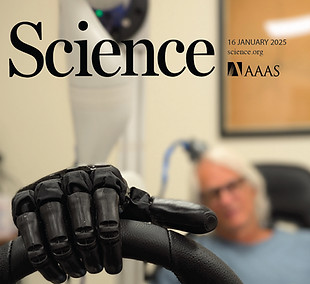
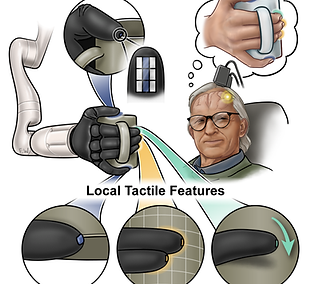
New in Science our study "Tactile edges and motion via patterned microstimulation of the human somatosensory cortex". 🦾 🧠 ⚡
In this work, we sought to expand the repertoire of artificial #touch, based on #intracortical microstimulation (ICMS), to confer greater dexterity to brain-controlled bionic hands. Specifically, we conveyed information about the local geometrical features of objects and about their motion, leveraging our understanding of how these sensory features are encoded in the #somatosensory cortex.
New paper out!
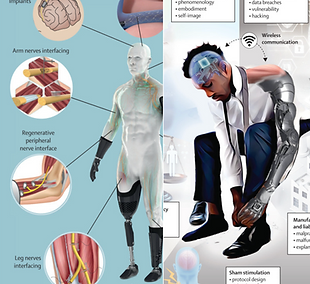
Our viewpoint examining the #ethical and #technical requirements in clinical trials for implantable neural prostheses is out in #LancetDigitalHealth.
New paper out!
%20Pubblica%20-%20Feed%20-%20LinkedIn%202025-01-10%20at%2012_38_37%20PM.png)
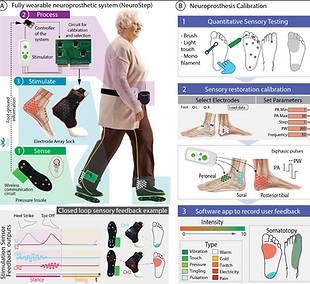
We’re excited to share our latest work, just published in Nature Communications: “Wearable non-invasive neuroprosthesis for targeted sensory restoration in neuropathy”
#Neuropathy leads to sensory loss, chronic #pain, and an increased risk of #falls, significantly affecting patients’ quality of life. In this study, we designed a #wearable, noninvasive #neuroprosthesis to restore lost sensations by delivering targeted neurostimulation at the ankle through a smart sock.
New paper out!

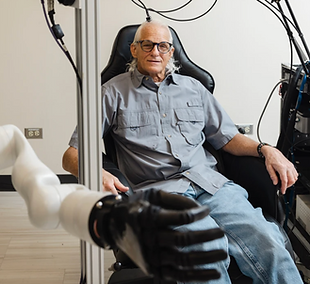
Exciting interview on the current status of neurally-integrated #bionic limbs on Nature Portfolio by Fred Schwaller, PhD 🦾🧠
with Robert Gaunt @ScottImbrie Rochelle Ackerley Jennifer Collinger Solaiman Shokur Hugh Herr Zhenan Bao Nitish Thakor Jennifer French
Interview out!
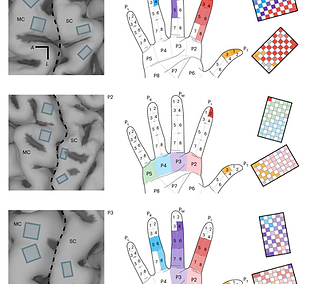
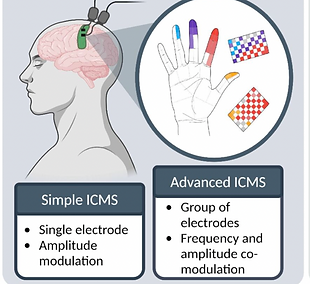
Check out our new paper 'Evoking stable and precise tactile sensations via multi-electrode intracortical microstimulation of the somatosensory cortex' on #NatureBiomedicalEngineering 🦾 🧠 ⚡
We are able to precisely apply appropriate forces on objects thanks to tactile signals from the hand. Here, we develop an approach to convey such signals via multi-electrode intracortical microstimulation (ICMS) to human S1 for bionic hands.
ICMS of S1 evokes touch sensations experienced over a spatially-restricted patch of skin. We take a deep dive into the size, distribution, reliability, and neural determinants of these so-called projected fields.
New paper out!
%20Attivit%C3%A0%20-%20Giacomo%20Valle%20-%20LinkedIn%202024-08-14%20at%203_59_30%20PM.png)
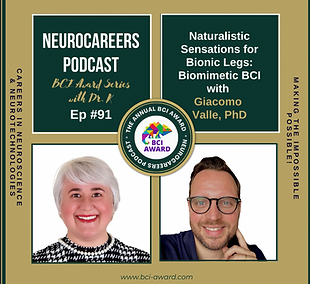
In this episode of Neurocareers: Doing the Impossible!, we explore this question with Giacomo Valle, PhD, a leading researcher in the field of biomimetic brain-computer interfaces (BCIs) and bionic legs. Dr. Valle and his colleagues have developed an innovative biomimetic BCI that uses peripheral nerve stimulation to convey naturalistic touch sensations in bionic legs. This groundbreaking work has earned them a spot as one of the 12 finalists for the BCI Award 2023.
Live on the BCI Award Podcast

My lab will actively collaborate with the Cortical Bionics Research Group #CBRG on intracortical #BCI with the fantastic sensory team Charles Greenspon at UChicago Medicine, Robert Gaunt at @RNELabs; with MYNERVA at Wyss Zurich on non-invasive neuromodulation Greta Preatoni; with Gaia Risso on mental-body representations and integration of bionic devices; with Elisa Donati Institute of Neuroinformatics, University of Zurich and ETH Zurich on neuromorphic neuroprosthetics; and many others!
LAB FOUNDATION